



13 Apr SEO Is Evolving: A Beginner’s Guide to GEO in 2026
For years, businesses focused on one goal: ranking higher in Google search results. Search Engine Optimisation (SEO) became the foundation of digital marketing, helping companies attract visitors, generate leads, and build online visibility.
In 2026, however, search is changing rapidly.
Consumers are increasingly turning to AI-powered platforms such as ChatGPT, Google AI Overviews, Gemini, Claude, and Perplexity to find answers. Instead of browsing through pages of search results, users can now receive detailed summaries, recommendations, and insights within seconds.
This shift has introduced a new concept that businesses need to understand: Generative Engine Optimisation, commonly known as GEO.
What Is GEO?
Generative Engine Optimisation is the process of helping AI-powered search tools discover, understand, and reference your content when generating answers for users.
Traditional SEO focuses on rankings and clicks. GEO focuses on visibility within AI-generated responses.
When someone asks an AI tool, “Who are the best web design agencies in Ontario?” or “How can I improve my website conversions?”, the AI searches through trusted information sources and generates an answer.
The goal of GEO is to increase the likelihood that your business, expertise, or content becomes part of that answer.
Why GEO Matters
Many businesses are already noticing a decline in website traffic despite maintaining strong search rankings.
One reason is that users are receiving answers directly from AI-powered search experiences. Instead of clicking through multiple websites, they often obtain the information they need immediately.
This does not mean websites are becoming less important. In fact, websites remain the primary source of information that AI systems use to generate responses.
The businesses that establish authority, trust, and expertise online are more likely to be cited, referenced, or recommended by AI-powered platforms.
GEO Is Not Replacing SEO
A common misconception is that GEO will replace SEO.
The reality is that GEO builds upon the same foundation.
Search engines and AI platforms still rely on many traditional SEO signals, including:
- High-quality content
- Fast-loading websites
- Mobile-friendly design
- Clear site structure
- Backlinks and authority signals
- Accurate business information
Without strong SEO fundamentals, GEO becomes much more difficult.
Think of SEO as building the house and GEO as making sure people can find it through new forms of search.
Create Content That Demonstrates Expertise
AI systems increasingly favour content that demonstrates genuine expertise rather than content created solely to attract search traffic.
Businesses should focus on publishing:
- Case studies
- Industry insights
- Original research
- Customer success stories
- Expert commentary
- Practical guides
Content based on real experience provides more value than generic articles that repeat information already available elsewhere.
The more unique and authoritative your content becomes, the more likely AI systems are to recognise it as a reliable source.
Structure Content for AI Understanding
Clear content structure helps both search engines and AI systems interpret information accurately.
Businesses should use:
- Descriptive headings
- Frequently asked questions
- Bullet-point summaries
- Clear topic organisation
- Internal linking
- Consistent formatting
Well-organised content allows AI tools to quickly identify important information and incorporate it into generated responses.
A page that is easy for humans to read is usually easier for AI systems to understand as well.
Strengthen Your Digital Authority
Authority plays a major role in both SEO and GEO.
AI platforms often favour information from sources that demonstrate credibility and expertise.
Businesses can strengthen authority by:
- Maintaining an active website
- Publishing thought leadership content
- Earning quality backlinks
- Gathering customer reviews
- Being featured in industry publications
- Keeping business information consistent online
The stronger your digital reputation, the more likely your content will be considered trustworthy.
Focus on Brand Visibility
One significant difference between traditional SEO and GEO is the importance of brand recognition.
When AI systems repeatedly encounter references to your company across trusted websites, publications, and online discussions, they gain confidence in your authority.
Businesses should think beyond rankings and focus on building a recognisable brand.
This includes:
- Consistent messaging
- Strong visual identity
- Thought leadership
- Public relations
- Social media engagement
- Industry participation
Brand visibility helps create signals that AI systems may use when determining which sources to trust.
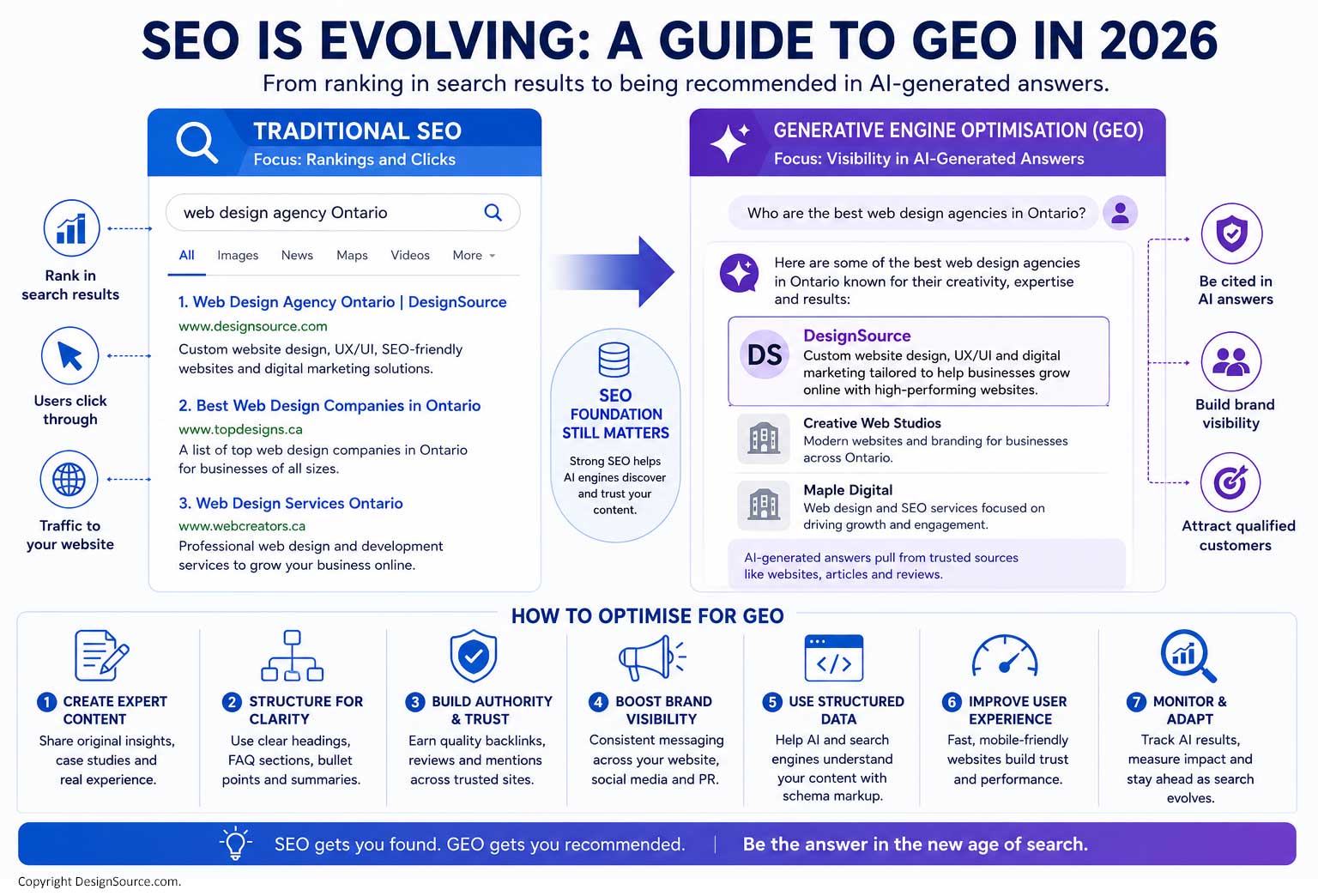
Practical GEO Steps Businesses Can Take Today
Getting started with GEO does not require a complete marketing overhaul.
Businesses can begin by:
- Updating website content regularly
- Publishing expert-driven articles
- Creating FAQ sections
- Adding structured data and schema markup
- Improving site speed and usability
- Building industry authority
- Encouraging online reviews
- Monitoring AI-generated search results within their industry
Small improvements made consistently can have a significant impact over time.
The Future of Search Is Already Here
Generative Engine Optimisation is not a future trend. It is already influencing how consumers discover businesses and make purchasing decisions.
Companies that adapt early will have an advantage as AI-powered search continues to evolve.
Rather than viewing GEO as a replacement for SEO, businesses should see it as the next evolution of digital visibility. By combining strong SEO fundamentals with authoritative content and brand-building strategies, organisations can position themselves for success in a search landscape increasingly shaped by artificial intelligence.
The businesses that embrace GEO today will be better prepared for the opportunities that tomorrow’s search experience will bring.