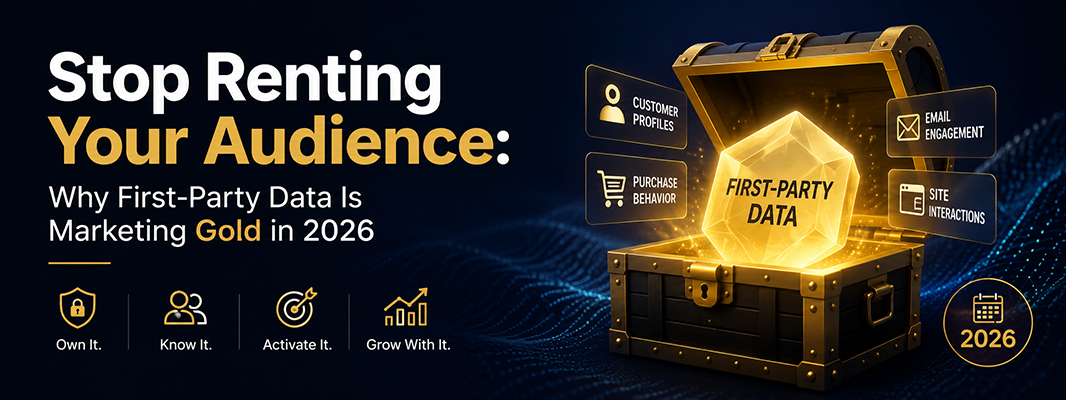



Stop Renting Your Audience: Why First-Party Data Is Marketing Gold in 2026
Social media has transformed how businesses connect with customers. A single post can reach thousands of people in minutes, making platforms like Facebook, Instagram, LinkedIn, and TikTok attractive marketing tools for small businesses. However, many business owners are discovering a hard truth in 2026: social media followers do not belong to them. Algorithms, platform changes, and AI-driven content recommendations increasingly control who sees business content. As organic reach declines and competition grows, many companies are finding it harder to engage the audiences they worked so hard to build. That is why first-party data has become one of the most valuable assets a business can own. What Is First-Party Data? First-party data is information collected directly from customers and prospects. This may include: Email subscribers Customer databases Loyalty programme members Purchase histories Customer preferences Survey responses Unlike social media followers, this data belongs to the business. No algorithm controls access to it, and no platform can suddenly reduce visibility. For small businesses, first-party data creates a direct line of communication with existing and potential customers. The Problem With Relying on Social Media Alone Many businesses invest significant time and resources growing their social media presence. While social platforms remain important marketing channels, they come with limitations. Algorithms determine which content appears in users' feeds. Even if a business has thousands of followers, only a small percentage may see a particular post. Platforms can also change their rules, introduce new advertising costs, or alter how content is distributed. Businesses have little control over these decisions. In effect, companies are renting access to an audience rather than...